
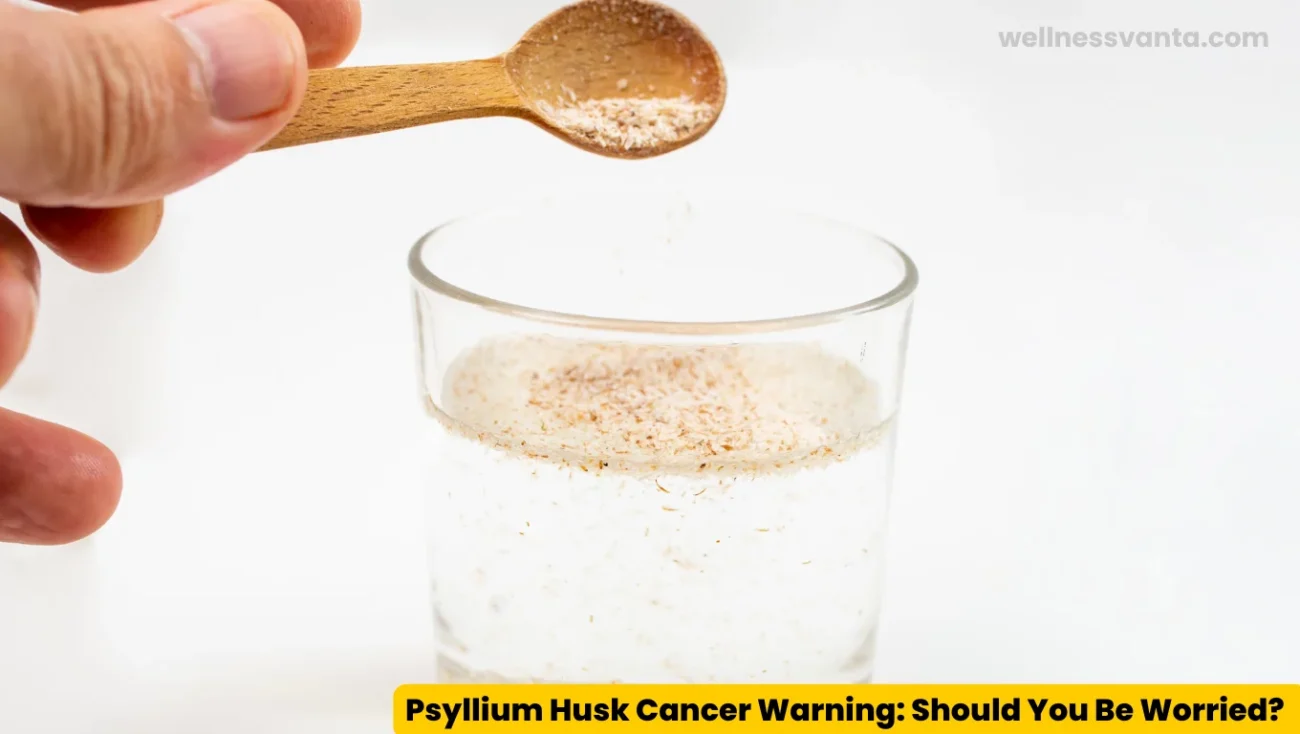
If you have noticed the psyllium husk cancer warning on some products, there is no need to panic.
This warning is usually required because of safety regulations, not because psyllium husk itself causes cancer. Since psyllium comes from plants grown in soil, it may contain tiny traces of substances like lead in fiber supplements. This is why you may also see concerns about psyllium husk lead or even metamucil lead.
In reality, these amounts are typically very low and controlled under safety guidelines. Psyllium husk remains a natural soluble fiber that supports digestion, gut health, and cholesterol levels when used properly.
What Is Psyllium Husk?
Psyllium husk is a natural soluble fiber made from the seeds of the Plantago ovata plant. It is commonly used as a fiber supplement to support digestion and improve overall gut health.
When mixed with water, psyllium forms a thick gel-like substance in the digestive system. This helps soften stool, improve bowel movement, and support colon health, which is why it is widely used for constipation relief and daily digestive support.
What Is the Psyllium Husk Cancer Warning?
The psyllium husk cancer warning is a label that may appear on some psyllium husk products due to regulatory safety rules. It does not mean that psyllium husk itself causes cancer. Instead, the warning is linked to possible trace amounts of substances like lead in fiber supplements, which can naturally occur in plants grown in soil.
Because of these regulations, companies are required to include warning labels even when the levels are extremely low and considered safe. This often creates confusion, leading many people to believe the product is harmful when it is generally safe if used properly.
Does Psyllium Husk Cause Cancer?
There is no strong scientific evidence that psyllium husk causes cancer. In fact, dietary fiber is often linked to better digestive health and reduced risk of certain diseases.
Scientific Evidence and Research
Studies suggest that fiber intake supports:
- healthy digestion
- improved gut microbiome
- reduced risk of colon issues
Soluble fiber like psyllium husk may actually help maintain colon health, which is important for long term wellness.
Is Psyllium Husk Carcinogenic?
Based on current research, psyllium husk is not considered carcinogenic. The cancer warning is mainly related to external factors like contamination concerns, not the fiber itself.
Fiber and Cancer Prevention
Some research suggests that a diet rich in fiber may help:
- support gut bacteria
- improve bowel function
- reduce colon cancer risk
This makes psyllium husk beneficial when used correctly.
Psyllium Husk Benefits for Health
Despite the warning confusion, psyllium husk offers several proven health benefits.
Digestive Health Benefits
Psyllium husk is commonly used for:
- relieving constipation
- improving bowel movement
- supporting digestive balance
It helps regulate the digestive system by adding bulk to stool.
Gut Microbiome Support
The fiber acts as food for beneficial gut bacteria. This supports a healthy gut microbiome, which plays a key role in digestion and immunity.
Heart Health and Cholesterol
Psyllium husk may help lower cholesterol levels. This supports heart health and reduces the risk of cardiovascular issues.
Psyllium husk supplements are not strictly regulated like medications, but the FDA recognizes psyllium as a beneficial dietary fiber that may help lower the risk of heart disease.
Psyllium Husk Risks and Side Effects
While generally safe, psyllium husk can cause side effects in some cases.
Common Side Effects
Some users may experience:
- bloating
- gas
- mild stomach discomfort
These effects usually occur when the body is adjusting to increased fiber intake.
Serious Risks
In rare cases, psyllium husk may cause:
- choking if taken without enough water
- allergic reactions
This is why proper usage is important.
Overuse and Dosage Risks
Taking too much psyllium husk can lead to digestive issues. Excess fiber can cause discomfort and imbalance in the digestive system.
Psyllium Husk Safety: What Experts Say
Health experts generally consider psyllium husk safe when used properly.
Recommended Daily Dosage
| Type | Amount |
|---|---|
| Psyllium husk dose | 5 to 10 grams per serving |
| Total daily fiber | 25 to 38 grams |
Starting with a small dose and gradually increasing intake is recommended.
Safe Usage Guidelines
To use psyllium husk safely:
- drink plenty of water
- avoid taking large amounts at once
- follow recommended dosage
These steps help reduce side effects and improve results.
Psyllium Husk and Lead Concerns
One of the main reasons behind the psyllium husk cancer warning is the concern about lead in fiber supplements.
Why Lead Appears in Psyllium Husk
Psyllium husk is derived from plants grown in soil. Soil may naturally contain trace amounts of heavy metals such as lead.
This means small amounts of lead can sometimes be present in:
- psyllium husk
- fiber supplements
- products like metamucil
Psyllium Husk Without Lead
Many manufacturers now focus on producing psyllium husk without lead or with extremely low levels that meet safety standards.
Choosing high quality, tested products can reduce concerns about contamination.
Is Lead in Fiber Supplements Dangerous?
The amount of lead found in most supplements is typically very low. However, long term exposure to high levels of heavy metals can be harmful.
This is why regulations require clear labeling, even when risk is minimal.
Psyllium Husk Cancer Warning vs Reality
Understanding the difference between fear and fact is important.
Myth vs Fact
| Claim | Reality |
|---|---|
| Psyllium husk causes cancer | No scientific proof supports this claim |
| Cancer warning means danger | Often related to labeling laws |
| Fiber supplements are unsafe | Generally safe when used correctly |
| Lead makes psyllium dangerous | Levels are usually very low and regulated |
This comparison helps clarify why the warning exists and what it actually means.
Who Should Avoid Psyllium Husk?
Although psyllium husk is safe for most people, some individuals should be cautious.
People With Digestive Conditions
Those with intestinal blockage or severe digestive disorders should avoid psyllium husk.
People Taking Certain Medications
Psyllium husk can affect how the body absorbs some medications. It is best to consult a healthcare professional if taking medication regularly.
People With Allergies
Some individuals may be sensitive to psyllium husk and should avoid using it.
How to Use Psyllium Husk Safely
Proper usage helps maximize benefits and reduce risks.
Best Way to Consume
Mix psyllium husk with water and drink it immediately before it thickens.
Tips for Safe Use
- always drink enough water
- start with small doses
- avoid taking it before bedtime
These simple steps help prevent side effects and improve digestion.
Psyllium Husk vs Other Fiber Supplements
Different fiber supplements offer different benefits.
Comparison Table
| Fiber Type | Benefit |
|---|---|
| Psyllium husk | Best for digestion and bowel movement |
| Chia seeds | Rich in nutrients and omega 3 |
| Oat fiber | Supports heart health |
Psyllium husk remains one of the most effective options for digestive health support.
Long Term Use of Psyllium Husk
Many people wonder if psyllium husk is safe for long term use.
Daily Use and Safety
When taken in recommended amounts, psyllium husk is considered safe for daily use.
Long Term Benefits
Long term use may support:
- digestive health
- cholesterol control
- gut balance
Consistency is key for achieving these benefits.
Conclusion
The psyllium husk cancer warning often creates confusion, but the truth is much simpler. Psyllium husk itself is not linked to cancer, and it remains a widely used and effective fiber supplement.
Most concerns come from factors like lead in fiber supplements, labeling regulations, and misunderstanding of warnings. When used correctly and sourced from quality products, psyllium husk is generally safe.
Understanding the difference between real risk and misleading information helps users make better health decisions. With proper usage and awareness, psyllium husk can be a valuable part of a healthy lifestyle.
Frequently Asked Questions
Find quick answers to common questions
Some products include warnings due to trace levels of heavy metals found naturally in soil, even when amounts are very low.
Metamucil and similar products may contain minimal trace amounts, but these are typically within regulated safety limits.
In some cases, high fiber intake may slightly affect absorption of certain nutrients, especially if taken in large amounts.
Psyllium husk usually starts improving digestion within 12 to 24 hours after consumption.
It can be helpful as a supplement, but whole foods like fruits and vegetables also provide additional nutrients.
Children may take it in small amounts, but dosage should be adjusted carefully and preferably discussed with a healthcare professional.
Its fiber content can promote fullness, which may support healthy eating habits and weight control.