
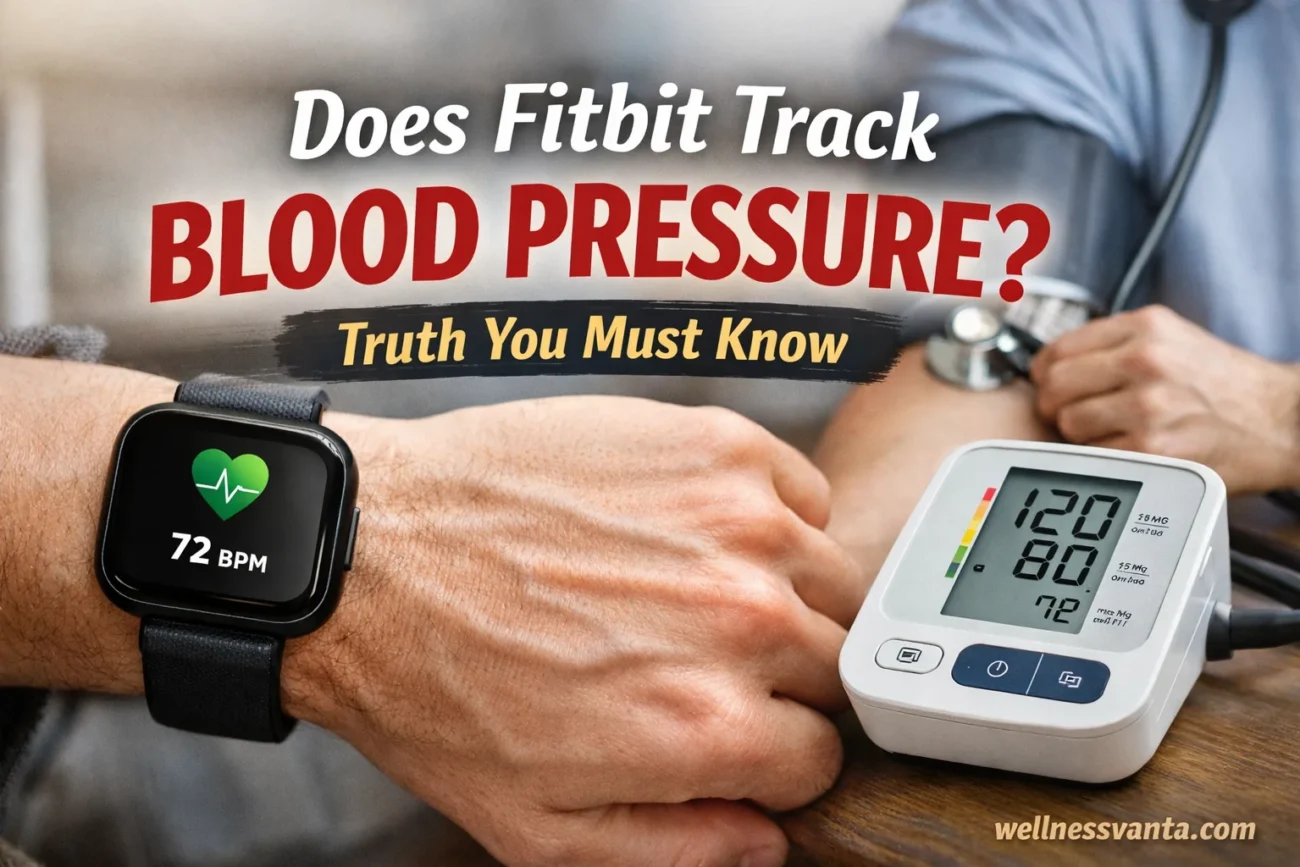
No, Fitbit does not track blood pressure.
While Fitbit is great for monitoring heart rate, sleep, activity, and blood oxygen (SpO2), it does not measure blood pressure in mmHg like medical devices do. Blood pressure requires specialized technology that wearable fitness trackers like Fitbit do not currently have.
Many users often ask, does Fitbit track blood pressure, especially since it tracks so many health metrics. However, this is a common misconception. Fitbit focuses on general wellness tracking, not clinical health measurements.
If you want accurate blood pressure readings, you should rely on a dedicated blood pressure monitor or a smartwatch that supports BP tracking with proper calibration.
What Fitbit Actually Tracks (And What It Doesn’t)
Fitbit is a powerful wearable health device, but it’s important to understand its real capabilities.
Health Metrics Fitbit Can Track
Fitbit focuses on general wellness and fitness tracking. It can measure:
- Heart rate (bpm) using optical sensors
- Sleep patterns and sleep quality
- Blood oxygen levels (SpO2)
- Steps, calories, and activity levels
- Stress and recovery trends
These features help users monitor overall health but are not meant for clinical diagnosis.
Health Metrics Fitbit Cannot Track
Fitbit does not currently support:
- Blood pressure (mmHg readings like 120/80)
- Blood glucose levels
- Medical-grade diagnostics or disease detection
Fitbit vs Medical Measurements
| Feature | Fitbit | Medical Device |
|---|---|---|
| Heart rate | Yes | Yes |
| Blood pressure | No | Yes |
| Accuracy level | General wellness | Clinical-grade |
| FDA approval | Limited | Required |
This comparison shows that Fitbit is a fitness tracker, not a medical device.
Why Fitbit Cannot Measure Blood Pressure
There are several technical and medical reasons why Fitbit does not track blood pressure.
Need for Cuff-Based Measurement
Traditional blood pressure monitors use a cuff that tightens around your arm. This allows the device to measure the actual pressure in your arteries.
Without this cuff, it is very difficult to get accurate readings.
Limitations of Wearable Sensors
Wearable devices rely on optical sensors, which are great for tracking trends but not precise enough for blood pressure.
Challenges include:
- Motion interference
- Skin differences
- Lack of calibration
- External factors affecting readings
Medical and FDA Requirements
Blood pressure measurement is considered a medical function.
Devices must meet strict standards and often require FDA approval or similar certifications. Fitbit devices are not classified as medical-grade blood pressure monitors.
Will Fitbit Add Blood Pressure Tracking in the Future?
The future of wearable health technology is evolving fast.
Fitbit and Google Health Innovations
Fitbit is now part of Google, and both companies are investing heavily in digital health. There is ongoing research into cuffless blood pressure monitoring using advanced sensors and AI.
Progress in Cuffless Technology
Some companies are experimenting with estimating blood pressure using:
- Pulse wave analysis
- Machine learning models
- Continuous health tracking data
However, these methods are still not fully reliable or widely approved for medical use.
So while Fitbit may introduce blood pressure tracking in the future, it is not available yet.
Can Any Smartwatch Measure Blood Pressure Accurately?
Some smartwatches claim to track blood pressure, but accuracy varies.
Smartwatches With Blood Pressure Features
Devices like Samsung Galaxy Watch and Huawei Watch offer BP tracking features.
However, these require:
- Regular calibration with a real BP monitor
- Manual setup
- Consistent usage conditions
Are These Measurements Reliable?
Even with calibration, smartwatch blood pressure readings are not as accurate as medical devices.
| Factor | Smartwatch BP | Medical Monitor |
|---|---|---|
| Accuracy | Moderate | High |
| Calibration | Required | Not required |
| Clinical use | Limited | Approved |
These devices are useful for trend tracking, not diagnosis.
Fitbit vs Blood Pressure Monitors
Understanding the difference helps you make better health decisions.
| Feature | Fitbit | Blood Pressure Monitor |
|---|---|---|
| Measurement type | Optical sensor | Cuff-based |
| Output | Heart rate, activity | mmHg readings |
| Accuracy | General tracking | Clinical accuracy |
| Use case | Fitness and wellness | Medical monitoring |
If your goal is to monitor hypertension or cardiovascular health, a blood pressure monitor is essential.
Is It Safe to Rely on Fitbit for Blood Pressure Insights?
Relying on Fitbit for blood pressure tracking is not safe.
Fitbit does not provide real BP readings, so using it as a substitute can lead to misleading assumptions about your health.
Potential Risks
- Missing early signs of hypertension
- Incorrect self-diagnosis
- Delayed medical treatment
When to Consult a Doctor
If you experience:
- Headaches
- Dizziness
- Chest discomfort
You should use a proper blood pressure monitor and seek medical advice.
Best Alternatives for Blood Pressure Tracking
If you want accurate blood pressure monitoring, here are better options.
Medical Blood Pressure Monitors
These are the most reliable devices.
- Arm cuff monitors
- Digital BP machines
- Clinically validated devices
Smart Devices With BP Features
Some smartwatches offer BP tracking with calibration, but they should be used carefully.
Hybrid Health Solutions
You can combine:
- A BP monitor
- Health apps
- Fitness trackers
This gives you a more complete view of your health.
Fitbit Blood Pressure Feature vs Reality
| Myth | Reality |
|---|---|
| Fitbit measures blood pressure | It does not |
| Wearables replace medical devices | They do not |
| BP tracking without calibration is possible | Not reliably |
This table highlights the gap between expectations and reality.
Conclusion
So, does Fitbit track blood pressure? The answer is clear.
Fitbit does not currently measure blood pressure, and it is not designed for medical-level monitoring. It uses advanced sensors to track heart rate and other health metrics, but blood pressure requires a different and more precise method.
Understanding this difference helps you make better health decisions. Use Fitbit for fitness and daily health insights, but rely on proper medical devices for accurate blood pressure monitoring.
Frequently Asked Questions
Find quick answers to common questions
No, Fitbit cannot detect hypertension because it does not measure blood pressure directly.
Some apps try to estimate blood pressure using heart rate data, but these estimates are not reliable or medically approved.
No current Fitbit model offers built-in blood pressure measurement features.
It is possible, as technology is evolving, but no official feature is available yet.
They can show trends, but they should never replace proper medical measurements.
Using a clinically validated arm cuff blood pressure monitor is the most accurate method.