
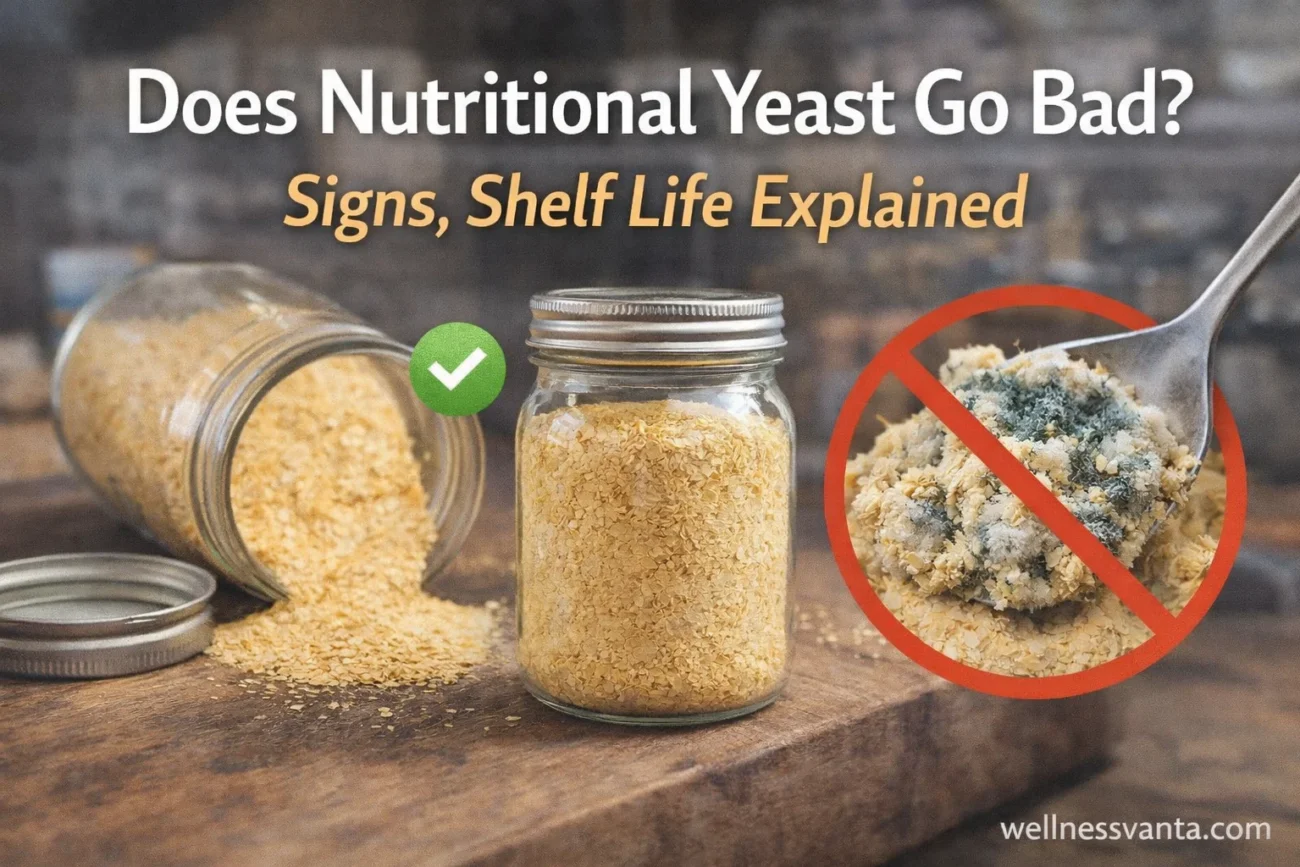
If you are wondering does nutritional yeast go bad, the short answer is yes, but not in the same way fresh foods do.
Nutritional yeast is shelf stable and rarely becomes dangerous quickly. Instead, it usually loses flavor, aroma, and nutritional potency over time. Moisture exposure is the biggest risk factor. If stored properly in a cool, dry, dark place, it can last for months or even years.
Now let’s break down exactly how long nutritional yeast lasts, how to tell if it has gone bad, and how to store it correctly.
Quick Answer: Does Nutritional Yeast Go Bad?
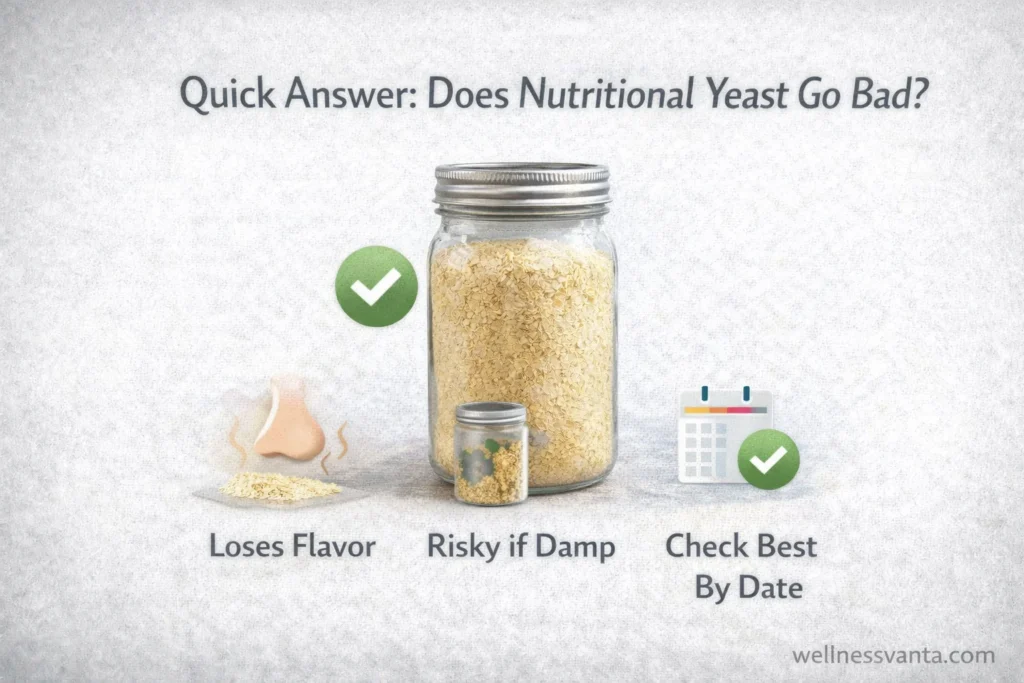
Yes, nutritional yeast can go bad, but true spoilage is uncommon when stored properly.
In most cases:
- It loses flavor first
- Then it may lose some B vitamins
- It only becomes unsafe if exposed to moisture or contamination
If your nutritional yeast smells fine, looks dry, and has no mold, it is usually safe even past the best by date.
What Is Nutritional Yeast and Why It Is Shelf Stable
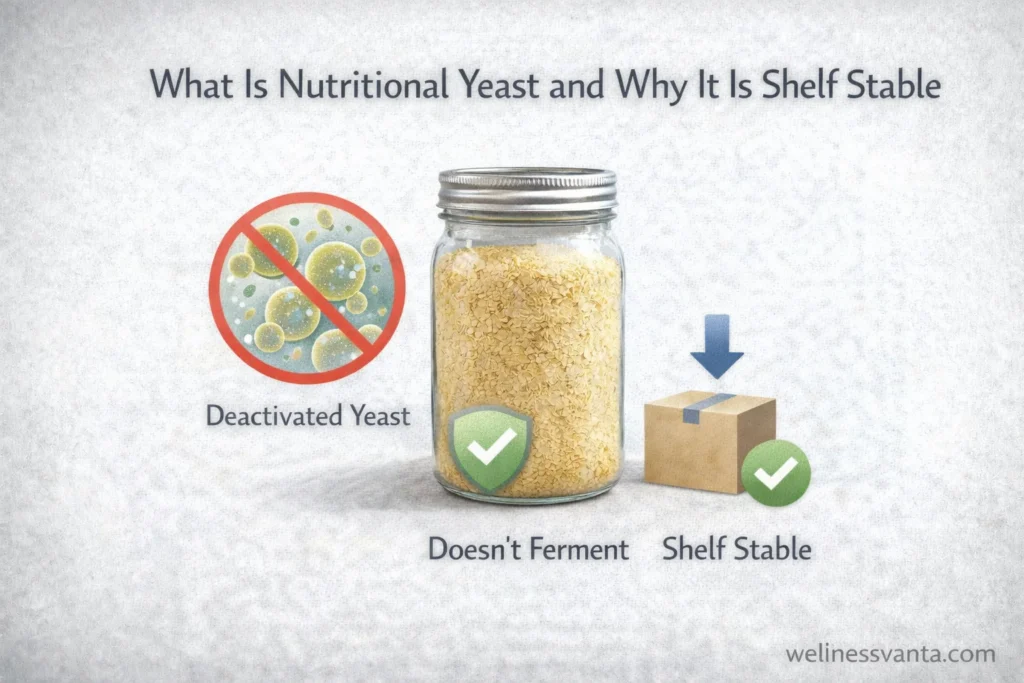
Nutritional yeast, often called nooch, is a deactivated yeast product. Unlike active baking yeast, it does not ferment or grow.
Because it is deactivated:
- It cannot multiply
- It does not produce gas
- It remains stable when dry
Most products are fortified with B vitamins, making them popular in vegan and plant based diets.
This dry, flaky structure explains why nutritional yeast shelf life is relatively long compared to fresh ingredients.
How Long Does Nutritional Yeast Last?
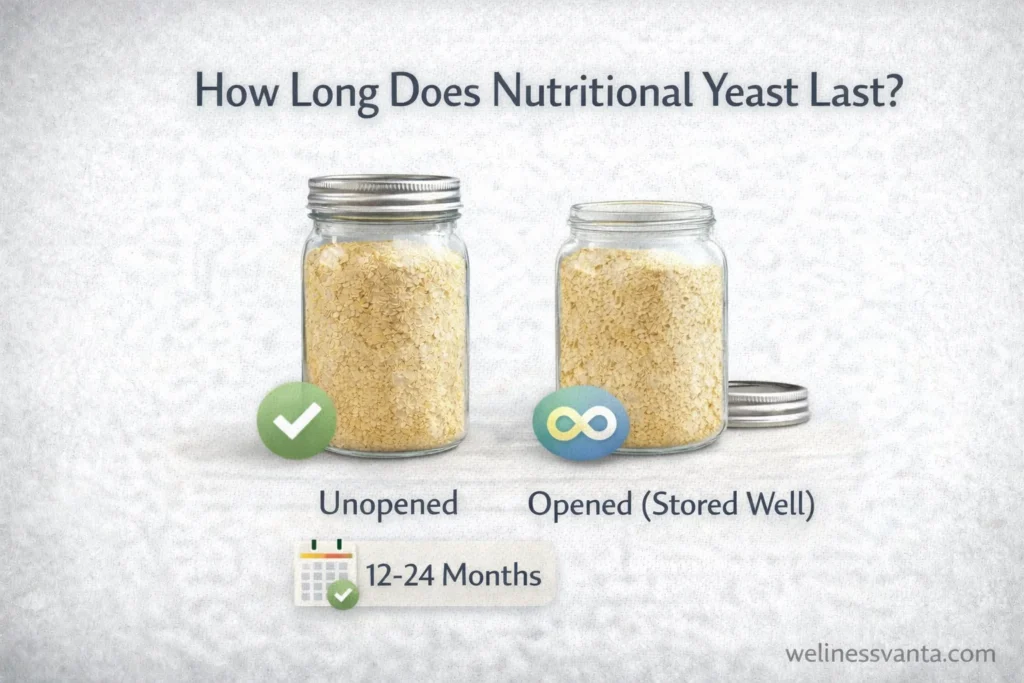
Shelf life depends on storage conditions, packaging, and whether it has been opened.
Unopened Nutritional Yeast Shelf Life
When sealed and stored properly, nutritional yeast typically lasts:
| Condition | Expected Shelf Life |
|---|---|
| Unopened | 12 to 24 months |
| Stored cool and dry | Up to 2 years |
The best by date usually indicates peak flavor and nutritional quality, not safety.
Opened Nutritional Yeast Shelf Life
After opening, exposure to air increases oxidation risk.
If stored in an airtight container in a cool, dry place, it can still last many months or longer.
Humidity and improper storage reduce shelf life significantly.
Does Nutritional Yeast Lose Nutritional Value Over Time?
Yes, especially if fortified.
B vitamins can gradually degrade with exposure to light, air, and heat. However, this does not necessarily mean the product is unsafe.
It may simply be less potent nutritionally and slightly weaker in flavor.
Signs Nutritional Yeast Has Gone Bad
Most people searching how can you tell if nutritional yeast is bad want a clear checklist.
Here are the reliable signs.
Smell Changes
Fresh nutritional yeast has a mild, cheesy, nutty aroma.
Discard it if you notice:
- Musty odor
- Sour smell
- Rancid scent
If it smells off, it likely absorbed moisture.
Texture Changes
Dry flakes should remain loose and powdery.
Warning signs include:
- Sticky texture
- Excess clumping
- Hard lumps that do not break apart easily
Clumping alone does not always mean spoilage. But if combined with odor changes, discard it.
Visual Red Flags
This is the most important check.
Throw it away immediately if you see:
- Mold spots
- Discoloration
- Dark patches
- Fuzzy growth
IMPORTANT: Mold means contamination. Do not taste test moldy nutritional yeast.
Stale vs Spoiled: Understanding the Difference
This is where many people get confused.
| Stale | Spoiled |
|---|---|
| Weaker flavor | Mold present |
| Reduced aroma | Sour or musty smell |
| Slight vitamin loss | Moist texture |
| Still safe | Unsafe to eat |
Stale nutritional yeast is usually safe. Spoiled nutritional yeast is not.
If it tastes flat but smells fine and looks dry, it is likely just stale.
What Causes Nutritional Yeast to Go Bad
Understanding the causes helps prevent waste.
Moisture and Humidity
Moisture is the biggest enemy of nutritional yeast.
Even small amounts of water from:
- Steam
- Humid pantry air
- Wet spoons
can trigger clumping and mold growth.
Heat and Light Exposure
High temperatures accelerate nutrient breakdown.
Direct sunlight can degrade flavor and B vitamins.
Always store nutritional yeast in a dark place.
Air and Oxygen Exposure
Oxidation causes flavor fading.
Repeated opening and closing increases exposure to oxygen, reducing quality over time.
Pantry Pests and Contamination
Dry goods can attract pantry insects if not sealed properly.
Always inspect containers for:
- Small holes
- Webbing
- Insect presence
Contamination requires disposal.
How to Store Nutritional Yeast Properly
Proper storage dramatically extends nutritional yeast shelf life.
Pantry Storage
Best practice includes:
- Airtight container
- Cool temperature
- Dry environment
- Away from direct sunlight
A cupboard away from heat sources works well.
Refrigerator Storage
Refrigeration can extend freshness but is not mandatory.
If you live in a humid climate, refrigeration may help reduce moisture exposure.
Ensure the container is tightly sealed to prevent condensation.
Freezer Storage
Freezing is rarely necessary but useful for bulk purchases.
When freezing:
- Use airtight packaging
- Avoid frequent thawing
- Let it return to room temperature before opening to prevent condensation
Bulk Storage Tips
If you buy large quantities, consider:
- Vacuum sealing
- Mylar bags
- Desiccant packets
- Portioning into smaller containers
These methods help prevent moisture exposure for long term storage.
Some storage methods can keep dry goods usable for several years if climate conditions remain stable.
Can You Eat Expired Nutritional Yeast?
The answer depends on condition, not just date.
Best by dates reflect peak quality.
If your nutritional yeast:
- Smells normal
- Looks dry
- Has no mold
It is usually safe to consume even past the printed date.
If in doubt, discard it.
Does Nutritional Yeast Go Bad Faster After Opening?
Yes, slightly.
Opening introduces air and humidity.
Each time you scoop:
- Air enters
- Moisture may enter
- Flavor can degrade
Always close the container tightly and use dry utensils.
Does Fortified Nutritional Yeast Expire Differently?
Fortified nutritional yeast contains added B vitamins.
Over time:
- Vitamin potency may decrease
- Flavor may weaken
- Safety typically remains intact if dry
The added nutrients may degrade before the yeast itself becomes unsafe.
Real Life Scenario: When to Keep It or Toss It
Let’s look at a practical example.
Case: You find nutritional yeast that is 18 months old.
It:
- Smells nutty
- Looks dry
- Has minor clumping
- No discoloration
Verdict: Likely safe, possibly slightly stale.
Now imagine:
It:
- Smells sour
- Has dark patches
- Feels sticky
Verdict: Discard immediately.
Final Verdict: When to Keep It and When to Toss It
So, does nutritional yeast go bad?
Yes, but usually through gradual quality decline rather than rapid spoilage.
It can last 12 to 24 months or longer when stored correctly. Moisture, heat, and air are the main risks.
Always check smell, texture, and appearance before use.
Proper storage keeps your nooch fresh and safe for months or years.
Frequently Asked Questions
Find quick answers to common questions
Nooch does not typically go bad in the fridge, but it must be stored in an airtight container to prevent moisture condensation.
Yes, if exposed to moisture. Mold appears as dark or fuzzy spots and requires immediate disposal.
Clumping often happens due to humidity exposure. If there is no bad smell or discoloration, it may still be safe.
When vacuum sealed and protected from moisture, bulk nutritional yeast can remain usable for years depending on climate.
It may be safe if stored properly and shows no signs of spoilage, though flavor and vitamin potency may decline.