
If you are wondering when not to have rotator cuff surgery, the short answer is this: you may not need surgery if your tear is mild, your pain is manageable, and your shoulder still works well in daily life. Many people recover with non surgical treatment like physical therapy, rest, and proper care.
Rotator cuff injuries can feel serious, but surgery is not always the best or first option. In many cases, a conservative treatment approach works effectively and avoids long recovery time and surgical risks.
This guide will help you understand when to avoid rotator cuff surgery, what alternatives exist, and how to make the right decision for your condition.
Quick Answer: When Should You Avoid Rotator Cuff Surgery?
You may not need rotator cuff surgery if:
- You have a partial tear instead of a full tear
- Your pain is mild to moderate and manageable
- You can still move your shoulder with good function
- You respond well to physical therapy or medication
- You have age-related degenerative changes
- You have health conditions that increase surgical risk
In these cases, non surgical management can provide relief and restore function without invasive procedures.
Understanding Rotator Cuff Tears and Their Severity
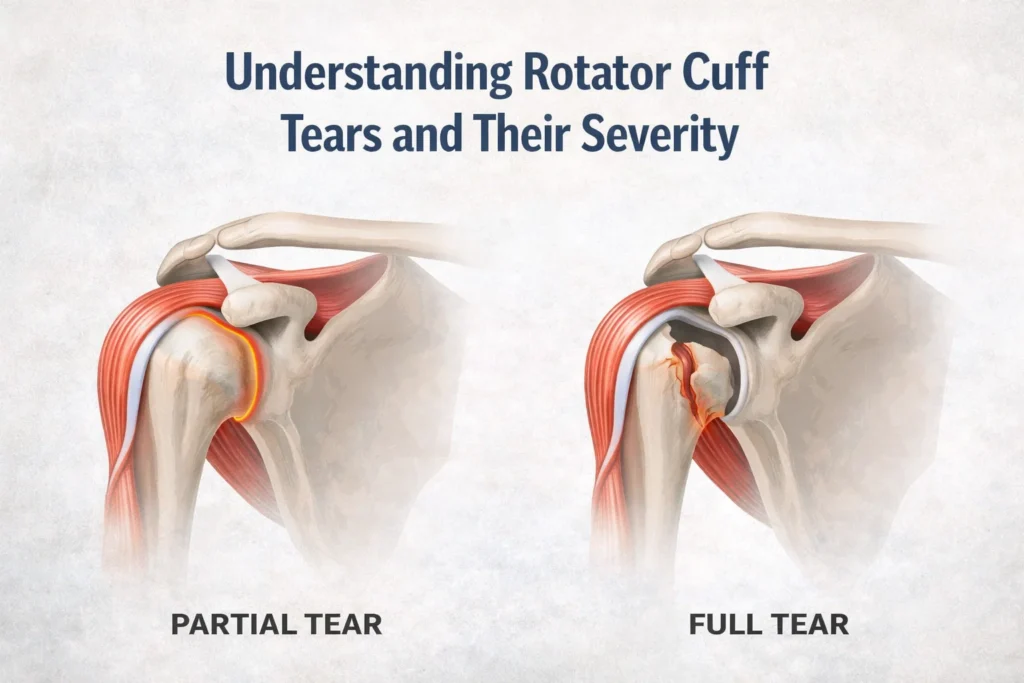
A rotator cuff tear happens when the shoulder tendons get damaged due to injury, overuse, or aging. It can range from a mild partial tear to a complete full-thickness tear.
The severity of the tear affects pain, strength, and movement. Understanding this helps decide whether non surgical treatment is enough or if surgery might be needed.
What Is a Rotator Cuff Tear?
The rotator cuff is a group of muscles and tendons that stabilize your shoulder joint. These tendons help you lift and rotate your arm smoothly.
A rotator cuff tear happens when one or more tendons become damaged or torn due to injury, overuse, or aging.
Types of Rotator Cuff Tears
Understanding tear severity helps determine whether surgery is necessary.
- Partial tear
The tendon is damaged but not completely torn - Full thickness tear
The tendon is completely torn from the bone - Degenerative tear
Develops gradually over time - Acute tear
Happens suddenly due to injury
Common Symptoms
Symptoms can vary based on severity, but usually include:
- Shoulder pain, especially during movement
- Weakness in the arm
- Limited range of motion
- Difficulty lifting objects
- Night pain or discomfort while sleeping
When Not to Have Rotator Cuff Surgery
You may not need surgery if your pain is manageable, your shoulder still works well, and your tear is mild. In many cases, non surgical treatment can effectively improve symptoms and restore function.
Mild or Partial Tears That Can Heal Without Surgery
Partial tears often improve with non surgical treatment. The body can adapt and heal enough to restore function.
With proper rehabilitation, many people regain strength without needing tendon repair surgery.
Pain Is Manageable Without Major Limitations
If your shoulder pain does not interfere with daily activities, surgery may not be necessary.
For example, if you can work, drive, and perform basic tasks without severe discomfort, conservative care is usually preferred.
You Respond Well to Non Surgical Treatments
If physical therapy, rest, or medication reduces pain and improves mobility, surgery can often be avoided.
A good response to treatment is a strong sign that your condition is manageable without surgical intervention.
Age Related Degenerative Tears
Many adults over 50 have rotator cuff tears without severe symptoms. These are often degenerative tears that do not always require surgery.
In such cases, focusing on strength, flexibility, and pain management is more beneficial.
Low Activity or Sedentary Lifestyle
If your daily activities do not demand heavy shoulder use, you may not need full strength restoration through surgery.
Non surgical treatment can provide enough function for normal life.
High Surgical Risk Due to Health Conditions
People with conditions like diabetes, heart disease, or poor healing capacity may face higher surgical risks.
Avoiding surgery in these cases can prevent complications and focus on safer alternatives.
Chronic Tears With Adapted Function
Some individuals live with rotator cuff tears for years. The body adapts, and other muscles compensate.
If function is stable and pain is controlled, surgery may not offer significant additional benefit.
When Rotator Cuff Surgery May Be Necessary
While many cases do not need surgery, there are situations where it becomes important.
Full Thickness Tears
Complete tears often require surgical repair, especially if function is significantly affected.
Severe Weakness or Loss of Function
If you cannot lift your arm or perform daily tasks, surgery may be needed to restore mobility.
Acute Injury in Active Individuals
Athletes or physically active individuals may need surgery to regain full strength and performance.
Failed Conservative Treatment
If symptoms do not improve after several months of non surgical treatment, surgery may be considered.
Non Surgical Treatment Options for Rotator Cuff Tears
Non surgical care focuses on reducing pain, improving strength, and restoring mobility.
Physical Therapy
Targeted exercises strengthen shoulder muscles and improve joint function.
Rest and Activity Modification
Avoiding movements that cause pain allows the tendon to recover.
Pain Management
Anti inflammatory medications help reduce swelling and discomfort.
Corticosteroid Injections
These injections reduce inflammation and provide temporary pain relief.
Home Care
- Applying ice or heat
- Gentle stretching exercises
- Maintaining proper posture
Can a Rotator Cuff Tear Heal Without Surgery?
In many cases, yes. Especially for partial tears, the goal is not always complete healing but functional recovery.
Studies suggest that about 60 to 80 percent of patients improve with non surgical treatment.
This means pain decreases and mobility improves enough to resume daily activities.
Rotator Cuff Surgery vs Non Surgical Treatment
| Factor | Surgery | Non Surgical |
|---|---|---|
| Recovery Time | 6 to 12 months | 3 to 6 months |
| Risk Level | Higher | Lower |
| Cost | Expensive | More affordable |
| Effectiveness | Best for severe tears | Effective for mild to moderate cases |
This comparison shows that avoiding surgery can be beneficial when symptoms are not severe.
Risks of Rotator Cuff Surgery You Should Know
Surgery can help in some cases, but it also comes with risks:
- Infection
- Stiffness in the shoulder joint
- Re tear of the tendon
- Long rehabilitation period
- Incomplete healing
Understanding these risks helps you make a more informed decision.
How to Decide If You Should Avoid Surgery
Making the right choice requires evaluating multiple factors.
Decision Checklist
- How severe is your pain
- Can you perform daily tasks
- What is the size of the tear
- Have non surgical treatments worked
- What is your age and activity level
Key Questions to Ask Your Doctor
- Do I really need surgery now
- What happens if I delay surgery
- Can physical therapy solve this
- What are the long term outcomes without surgery
Real Life Scenarios: When Surgery Is Not the Best Option
Case 1: Older Adult With Mild Tear
An individual in their 60s with mild pain and good mobility benefits more from therapy than surgery.
Case 2: Office Worker With Shoulder Pain
A desk worker with limited activity demands can manage symptoms through exercises and posture correction.
Case 3: Athlete With Partial Tear
With proper rehab and strengthening, even active individuals can avoid surgery if the tear is not severe.
Recovery Timeline Without Surgery
Weeks 1 to 6
Focus on pain reduction and inflammation control.
Weeks 6 to 12
Begin strengthening exercises and improving mobility.
3 to 6 Months
Most people regain functional movement and return to normal activities.
Long Term Outlook Without Surgery
Living with a rotator cuff tear is possible with proper care.
You can maintain shoulder health by:
- Staying active with safe exercises
- Avoiding strain
- Managing inflammation
Many people live pain free or with minimal discomfort without surgery.
Exercises That Help Avoid Rotator Cuff Surgery
- Shoulder blade squeezes
- Resistance band exercises
- Gentle arm raises
- Stretching routines
Consistency is key to improving strength and mobility.
Lifestyle Changes That Support Healing
Simple daily habits can improve recovery:
- Maintain a healthy weight
- Eat an anti inflammatory diet
- Sleep in a shoulder friendly position
- Avoid repetitive strain
These changes support long term shoulder health.
Emotional and Psychological Factors in Surgery Decisions
Fear and anxiety often influence decisions about surgery.
Some people prefer to avoid surgery due to:
- Fear of complications
- Concern about long recovery
- Impact on daily life
Addressing these factors helps you make a balanced decision.
Cost Considerations: Surgery vs Non Surgical Care
Surgery can be expensive and involve additional costs like rehabilitation and time off work.
Non surgical treatment is generally more affordable and allows quicker return to normal life.
Common Mistakes to Avoid
- Ignoring early symptoms
- Rushing into surgery without trying therapy
- Skipping rehabilitation exercises
- Delaying treatment for too long
Avoiding these mistakes can improve outcomes.
When to Reconsider Surgery Later
Even if you avoid surgery initially, you may need to reconsider if:
- Pain becomes severe
- Shoulder strength decreases
- Mobility worsens
- Non surgical treatment stops working
Conclusion
Knowing when not to have rotator cuff surgery can help you avoid unnecessary risks and long recovery time. If your pain is manageable, your shoulder function is stable, and non surgical treatment is working, surgery may not be needed.
Focus on improving strength, reducing inflammation, and maintaining mobility. The right decision depends on your condition, lifestyle, and long term goals. Always choose a treatment path that supports both recovery and quality of life.
Frequently Asked Questions
Yes, some tears may enlarge over time, especially without proper care. Regular monitoring and strengthening exercises can help slow progression.
In many cases, delaying surgery is safe if symptoms are manageable and function is preserved. However, regular evaluation is important.
No, many people have tears without noticeable pain or limitation. These are often discovered during imaging for other issues.
Repetitive overhead movements and heavy lifting can worsen the condition. Modifying activities helps prevent further damage.
Doctors assess tear size, pain level, strength, mobility, and response to treatment before recommending surgery.
For many mild to moderate cases, long term therapy can provide lasting relief and functional improvement.
Yes, many people regain strong and functional shoulders through proper rehabilitation and consistent exercises.