

Does Collagen Cause Weight Gain?
The short answer is no, collagen itself does not automatically cause weight gain. However, like any protein supplement, it contains calories. If those calories push you into a calorie surplus, weight gain can happen.
For most people, collagen peptides support muscle, joint, and skin health without increasing body fat. The real factor behind weight gain is total daily calorie intake, not collagen alone.
Let’s break this down clearly with science, calorie math, and real world examples.
Quick Answer: Does Collagen Cause Weight Gain?
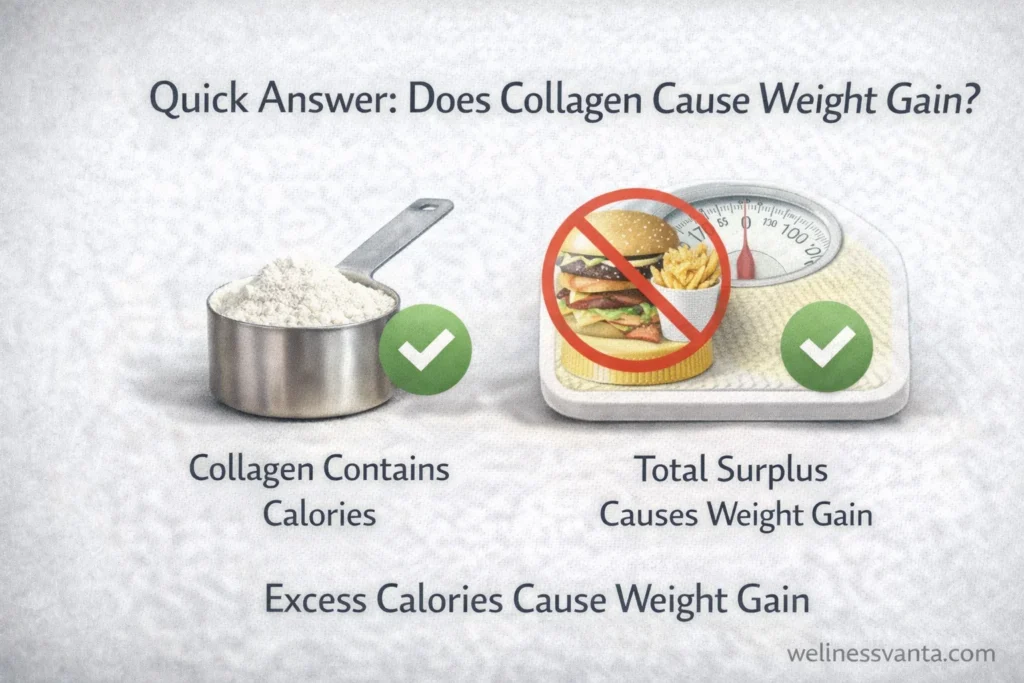
Collagen does not directly cause fat gain.
Weight gain only occurs when:
- You consume more calories than you burn
- You consistently remain in a calorie surplus
- You reduce physical activity while increasing intake
Collagen protein contains calories, typically around 35 to 40 calories per scoop. If added without adjusting total intake, it can contribute to excess energy.
IMPORTANT: Collagen is a protein source, not a fat storing hormone trigger.
What Is Collagen and How It Works in the Body
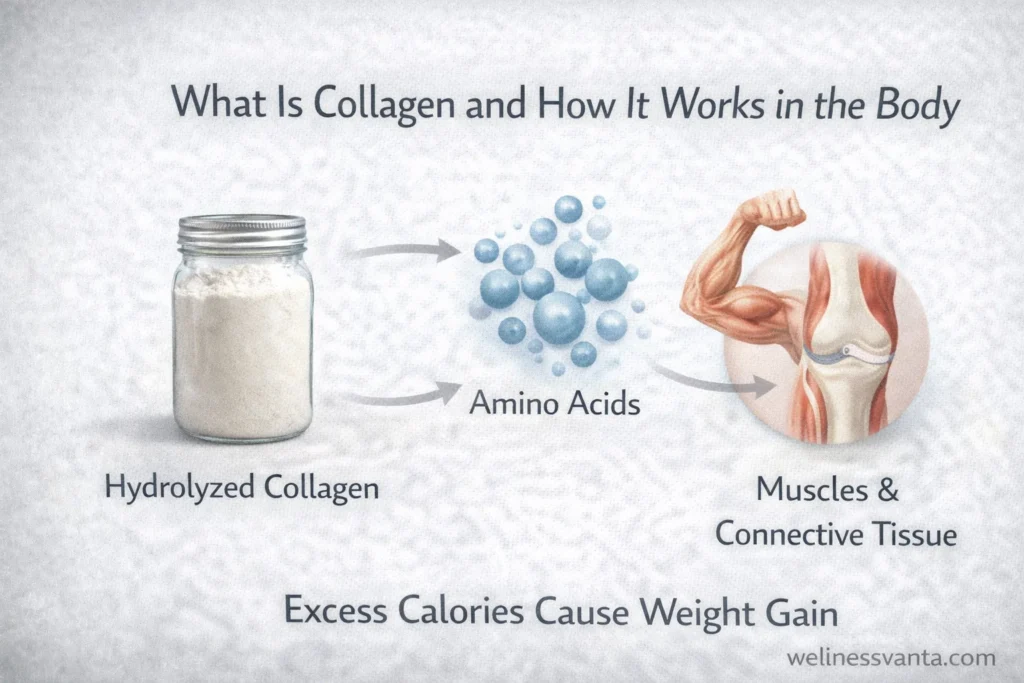
Collagen is the most abundant protein in the human body. It supports skin elasticity, joints, tendons, ligaments, and connective tissue.
Most supplements contain:
- Hydrolyzed collagen
- Collagen peptides
- Amino acids like glycine and proline
Unlike whey protein, collagen is not a complete protein. It lacks certain essential amino acids needed for optimal muscle growth. However, it still contributes to overall protein intake.
Protein supplementation plays a role in lean body mass maintenance and body composition.
How Many Calories Are in Collagen?
Understanding calories is key to answering whether collagen and weight gain are linked.
Most collagen powders provide:
| Serving Size | Calories | Protein |
|---|---|---|
| 1 scoop | 35 to 40 calories | 9 to 10 grams |
| 2 scoops | 70 to 80 calories | 18 to 20 grams |
Now consider a simple example.
If you take one scoop daily:
40 calories x 30 days = 1,200 calories per month
Since approximately 3,500 calories equal one pound of fat, collagen alone would not cause noticeable fat gain unless combined with other excess calories.
This highlights the role of energy balance.
Can Collagen Cause Fat Gain?
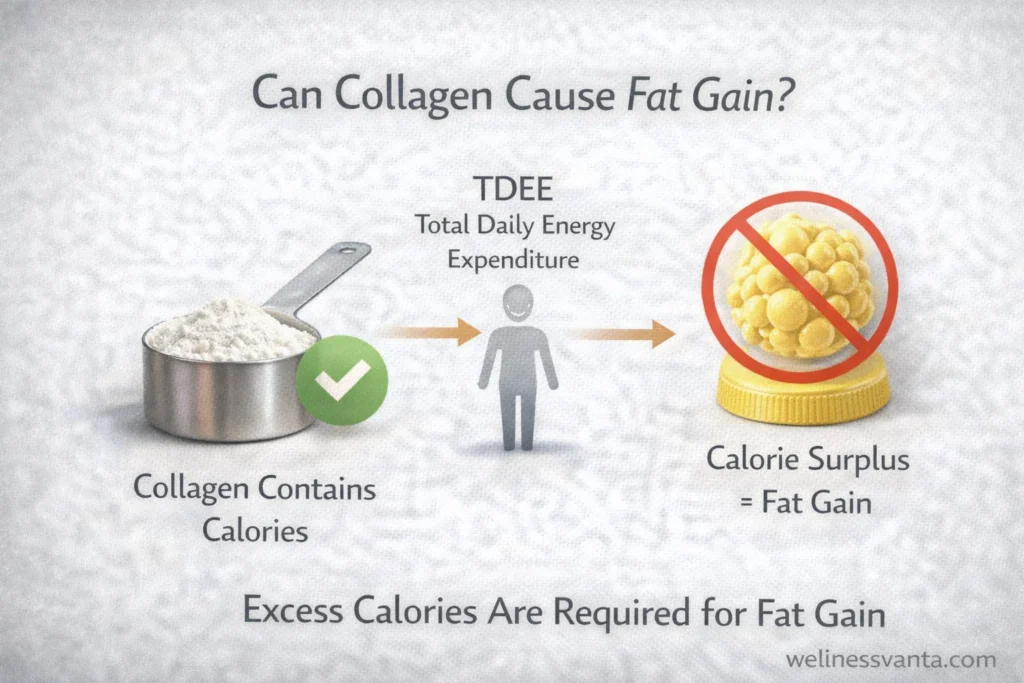
Fat gain happens when you consume more calories than your body burns.
This principle applies to:
- Protein
- Carbohydrates
- Fats
- Even healthy foods
Collagen contains protein calories. If added to a diet that already meets calorie needs, it may create a small surplus.
However, collagen does not inherently increase body fat percentage. It simply contributes to total calorie intake.
Collagen and Muscle Gain: Why the Scale May Increase
Some people notice a slight weight increase after starting collagen.
This is often misunderstood.
Protein supports muscle growth, especially when combined with resistance training. Muscle mass increases may cause scale weight to rise.
There is a difference between:
- Fat mass increase
- Lean muscle mass increase
Muscle weighs more than fat per volume. So a small gain on the scale may reflect improved body composition.
Does Collagen Increase Appetite or Cause Overeating
Protein generally promotes satiety.
Collagen peptides may:
- Reduce hunger
- Increase fullness
- Stabilize blood sugar response
For some individuals, collagen can actually support weight loss efforts by reducing snacking.
However, if mixed into high calorie beverages like sugary smoothies or coffee with cream, the total calorie intake increases.
It is not collagen that causes weight gain, but the combined ingredients.
Collagen and Water Retention: Myth or Reality
Some users report feeling bloated after starting collagen.
This is usually temporary and not true fat gain.
Water retention differs from fat accumulation.
Water weight:
- Fluctuates daily
- Often relates to sodium intake
- Can vary with hormone cycles
Collagen itself does not typically cause significant water retention.
Who Might Experience Weight Gain from Collagen
Certain scenarios increase the likelihood of weight gain.
Adding Collagen Without Adjusting Calories
If someone consumes 2 scoops daily without reducing other calories, that adds around 80 extra calories.
Over time, consistent surplus may lead to gradual fat gain.
Sedentary Lifestyle
Low activity combined with additional protein intake may increase total stored energy.
High Protein Stacking
Some individuals consume:
- Whey protein
- Collagen
- Protein bars
Without tracking intake, calories accumulate quickly.
Calorie Dense Drinks
Adding collagen to:
- High calorie smoothies
- Sweetened coffee drinks
- Meal replacement shakes
increases overall intake.
In these cases, weight gain results from the entire diet, not collagen alone.
Does Collagen Help With Weight Loss Instead
Interestingly, collagen may support weight management.
Protein increases satiety. Higher protein diets are linked to better appetite control.
Collagen supplementation may:
- Help maintain lean body mass
- Reduce cravings
- Support muscle recovery
- Assist fat loss during calorie deficit
Some studies suggest protein intake between 0.8 to 2.2 grams per kilogram of body weight supports body composition goals.
Collagen contributes to total protein intake but should not replace complete protein sources entirely.
Collagen Dosage and Safe Daily Intake
Most research suggests safe intake between:
- 10 to 20 grams per day
- Some protocols allow up to 30 grams daily
This equals roughly 40 to 120 calories.
For most adults, this calorie amount is small compared to daily energy needs.
If your maintenance calories are 2,000 per day, collagen contributes a minor percentage.
Collagen vs Whey Protein: Which Affects Weight More
Both are protein sources, but they differ in composition.
| Feature | Collagen | Whey Protein |
|---|---|---|
| Complete protein | No | Yes |
| Muscle building potential | Moderate | High |
| Calories per scoop | 35 to 40 | 100 to 120 |
| Satiety effect | Moderate | Strong |
Whey contains more calories per serving. Therefore, whey protein is more likely to influence weight if consumed in excess.
Collagen is lower in calories and less likely to cause noticeable fat gain.
Does Collagen Slow Metabolism
There is no strong evidence that collagen slows metabolism.
In fact, protein has a higher thermic effect than fats or carbohydrates. This means your body burns slightly more calories digesting protein.
Collagen digestion speed is moderate. It does not shut down metabolic rate.
Weight changes relate more to total energy balance than metabolic slowdown.
Real Life Scenario: When Collagen Could Add Weight
Let’s look at a practical example.
Case Study:
A person adds 2 scoops of collagen to a morning smoothie containing:
- Banana
- Peanut butter
- Oats
- Almond milk
The smoothie totals 600 calories.
Before collagen, breakfast was 400 calories.
Now daily intake increased by 200 calories. Over time, this consistent surplus may lead to weight gain.
The cause is total calorie load, not collagen protein alone.
Does Collagen Cause Weight Gain in Women
Women often search this due to hormonal sensitivity.
Collagen does not directly influence estrogen or fat storage hormones in a way that causes fat gain.
Weight gain patterns in women are influenced by:
- Hormones
- Menstrual cycle
- Calorie intake
- Activity levels
Collagen behaves like any other protein in this context.
Common Myths About Collagen and Weight Gain
Many people worry that simply adding collagen to their routine will lead to unwanted fat gain. This belief usually comes from confusion about how calories and protein work in the body. In reality, collagen behaves like any other protein source and does not automatically cause weight gain.
Myth 1: Collagen Automatically Makes You Fat
False. Calories cause fat gain, not collagen itself.
Myth 2: Collagen Causes Belly Fat
There is no evidence that collagen targets abdominal fat storage.
Myth 3: Collagen Stops Weight Loss
Weight loss depends on calorie deficit. Collagen can fit into a weight loss plan.
Myth 4: Collagen Slows Metabolism
Protein intake generally supports metabolic activity rather than suppressing it.
Final Verdict: Does Collagen Cause Weight Gain?
Collagen does not inherently cause weight gain.
It contains calories, like all protein supplements. If those calories contribute to a calorie surplus, weight gain may occur.
If collagen is added thoughtfully within your daily energy needs, it will not increase body fat.
Muscle gain, water fluctuations, and improved body composition may slightly change scale weight, but that is not fat accumulation.
Frequently Asked Questions
Find quick answers to common questions
Some individuals experience mild digestive adjustment when starting collagen. This is usually temporary and not linked to fat gain.
Collagen contains protein and calories, so it technically breaks a strict fast.
Only if it contributes to a sustained calorie surplus.
Collagen has fewer calories per serving, but whey provides a more complete amino acid profile.
Weight changes depend on total calorie intake and activity levels, not collagen alone.